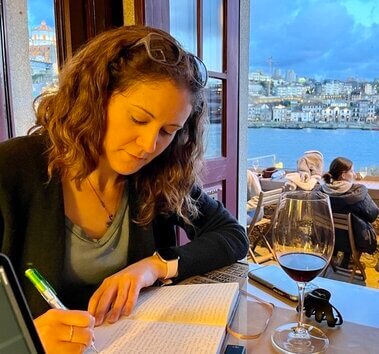
Getting sick while traveling is something many of us dread. But it’s inevitable the more you travel and, frankly, a rite of passage for adventurous eaters! With the right mindset, tools, and support, you can recover quickly and continue your adventure.
I’ve learned the hard way how to handle food poisoning by falling ill every time I leave the country. Whether it was trusting sushi in Marrakech, or more recently eating warm ceviche on the streets of Puerto Vallarta, each mishap taught me valuable lessons.
Now let me share them with you!

WARNING: We’re getting graphic about bodily functions.
*NOTE: I am not a medical doctor. These suggestions are based on personal experience and are not intended to be medical advice. Always consult a qualified healthcare provider before starting any new medications, especially if you have underlying health conditions.*
Recognize Symptoms
The early signs of food poisoning can hit hard: sudden nausea, vomiting, or urgent diarrhea. While these are unpleasant, they are your body’s natural way of ejecting toxins. Here’s what to know:
- Don’t immediately take medication to stop these actions. Your body is attempting to eliminate whatever contaminate it just ingested in the most efficient way possible.
- If you feel better after each “episode,” your body is likely recovering, but…
- …if symptoms persist for over 24 hours, or if you experience dehydration, fever, or blood in your stool, it’s time to seek medical attention.
Natural Remedy
My favorite food poisoning fix includes activated charcoal powder, electrolytes, and natural senna tea.
When taken orally, activated charcoal works by binding to toxins in liquids in the gastrointestinal tract. It attracts many viruses and bacteria, but doesn’t with for poisoning from alcohol or heavy metals.
Learn more about studied benefits and risks of activated charcoal here.
It’s important to note that charcoal can also decrease the absorption of medications and important vitamins and minerals. I drink electrolytes twice per day to replace critical nutrients lost from vomiting and diarrhea. Mixed with water, this helps increase hydration while you’re spewing fluids.
Since charcoal can’t be absorbed by the gut, it constipates you, significantly slowing down diarrhea. After being stopped up for a few hours, I finish the day with senna tea, a natural laxative. This helps to remove and eliminate the charcoal. The liquid in tea also helps with hydration.
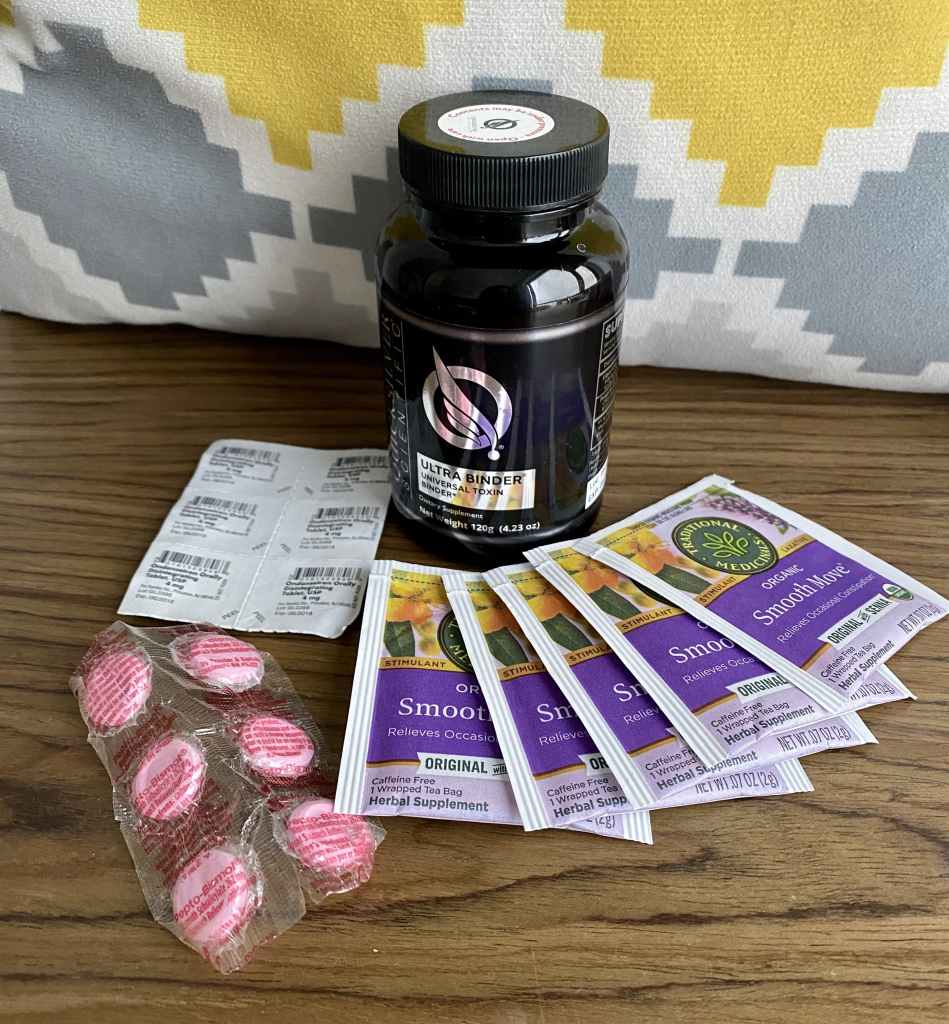
My products of choice include:
- Charcoal: Quicksilver Scientific’s Ultra Binder
- Senna Tea: Traditional Medicinals Smooth Move Tea
- Electrolytes: Liquid IV, LMNT, or any liquid or powdered option available at your local pharmacy or grocery store.
Must Have Medicines
*NOTE: Check country requirements before packing lots of medications. Some countries require you to declare it or bring a limited supply.*
I always bring a collection of actual medicines, too, and have used the following for certain situations:
Anti-diarrheal
Meds like loperamide (imodium) or atropine (lomotil) slow down gut movement. They don’t bind to toxins like charcoal, but they can come in handy when you absolutely need to stop shitting. Like if you have an unavoidable flight or bus ride or have to go white water rafting.

Laxatives
For when you are constipated, such as after taking anti-dirrheals.
Anti-nausea
I like to use bismuth subsalicylate (Pepto-Bismol) for ongoing indigestion. Many people recommend dimenhydrinate (Dramamine) for motion sickness. I always have ondansteron (zofran) on hand but have never actually used it for food poisoning.
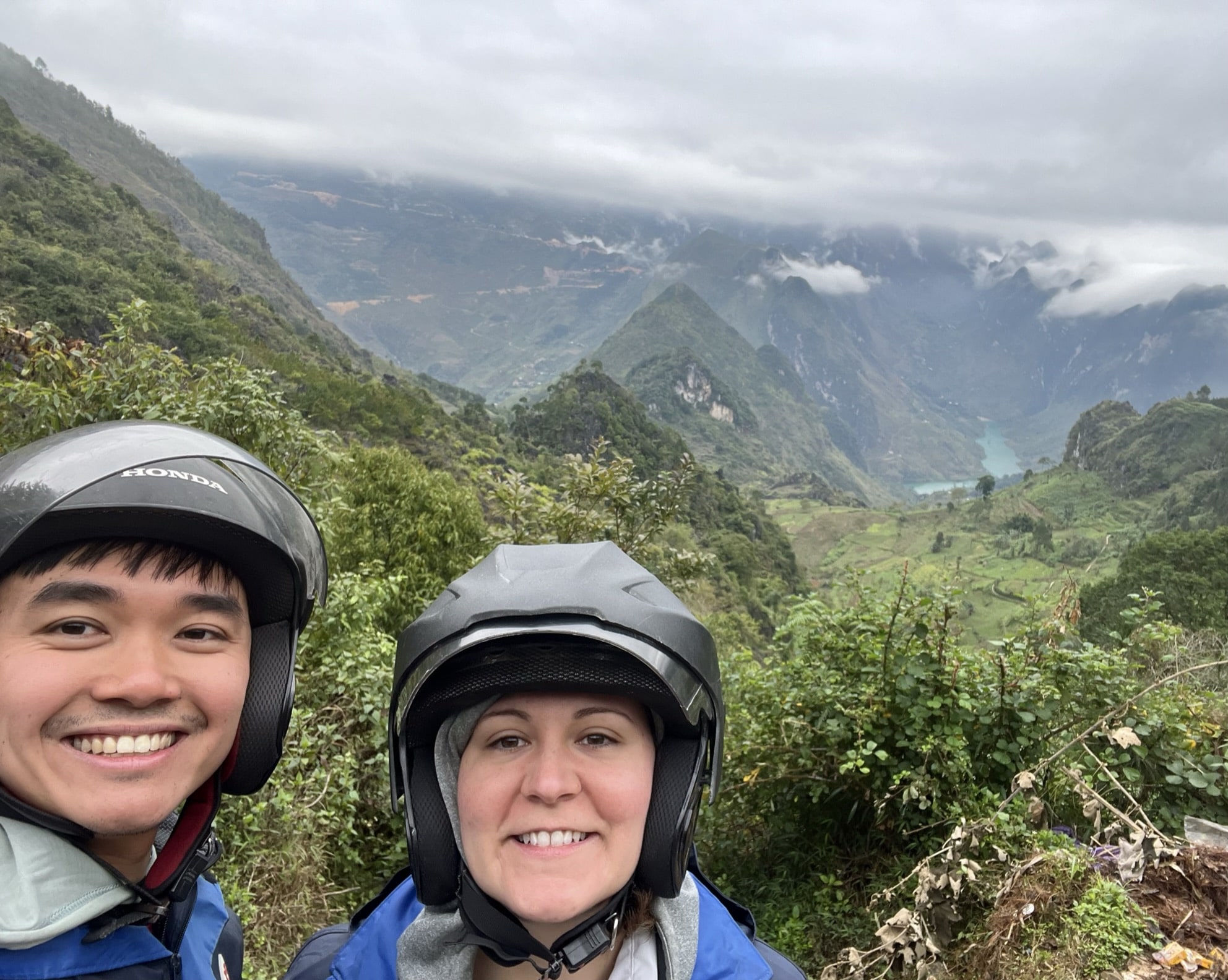
During a 3-day motorcyle tour of the Ha Ziang loop in northern Vietnam, our hired drivers hazed us each night with rice wine from unmarked water bottles. They led chants that ended in shots of “happy water” that is surprisingly easy to drink. I awoke one of the days with a pounding headache and feeling sick to my stomach. I was quite grateful to have zofran on hand as we strapped in for a second day of riding our bikes through the mountains!

When it’s Time to Get Help
Whether you’re traveling solo or with a companion, knowing when and how to seek help is key to recovering quickly.
If Traveling Solo
Traveling alone doesn’t mean you have to suffer alone. Reach out to the people around you—the host of your accommodations or people you’ve met. Most people are happy to help if you let them know what you need.
If you’ve been staying in public lodging like hostels, consider upgrading to a private room, hotel, or Airbnb. Amenities like a comfortable bed, hot shower, or room service will ensure a restful recovery.
On a solo cross-country road trip in 2017, I developed a nasty sinus infection just as I got started. A kind waitress in Venice Beach, California brought me complimentary warm water with honey and lemon without being prompted. It was such a sweet gesture when I felt I was struggling all by myself.
If Traveling with Others
Talk to your travel companion about how they can support you – whether it’s picking up medicine, arranging transportation, or simply checking in on you. Open communication can make all the difference when you’re feeling unwell. (And it’s a great time to learn how you truly get along with someone!)
You can still lean on people you’ve met also. In the Philippines, we told our hotel owners about our food poisoning (yet again from seafood). They were kind enough to go out and get tea and gatorade and bring it to our room! Again free of charge.
When to Seek Medical Attention
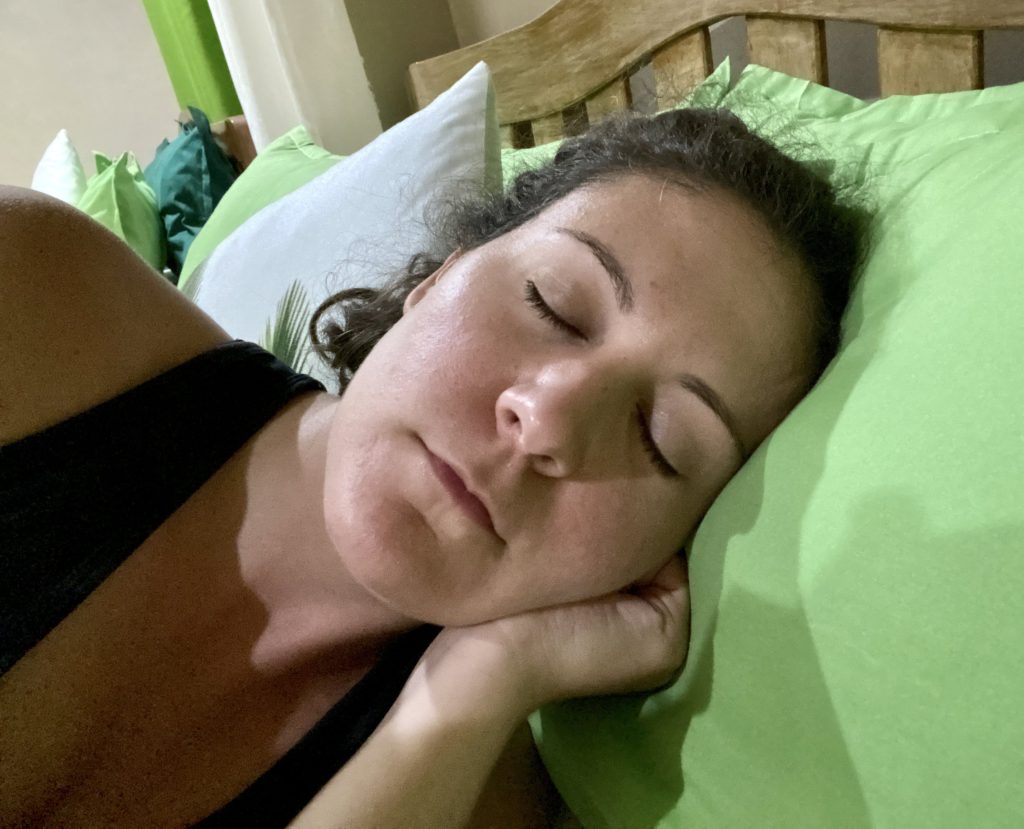
If you’re spewing fluids but each evacuation helps you feel better, you’re likely on the mend! However, if you haven’t kept fluids down for over 24 hours, start bleeding, develop a fever, or feel weaker… it’s time to seek medical attention.
Options will vary depending on where you’re traveling. Some destinations offer delivery hydration services, like Bali, Indonesia where food poisoning is super common. Other places require a visit to a local clinic, hospital, or emergency room.
Honestly, I rely on Google maps reviews for healthcare research while abroad. But the CDC also has resources for finding healthcare while traveling (click here).
Final Thoughts
Getting sick is never fun, but it’s often just a bump in the road when traveling. The kindness of strangers, the resilience you discover in yourself, and the lessons learned along the way all become part of your story. With a bit of preparation and the right mindset, you’ll be back on your feet in no time.
Have you ever had a travel sickness story that taught you something valuable? Share in the comments below – I’d love to hear!

 Stroll with Nicole
Leave a comment